Logo Quiz: Guess the Brand!
- 4.7
- Rating
- 1.00M
- Installs
- Free
- Price

 Analysis by App-foxy
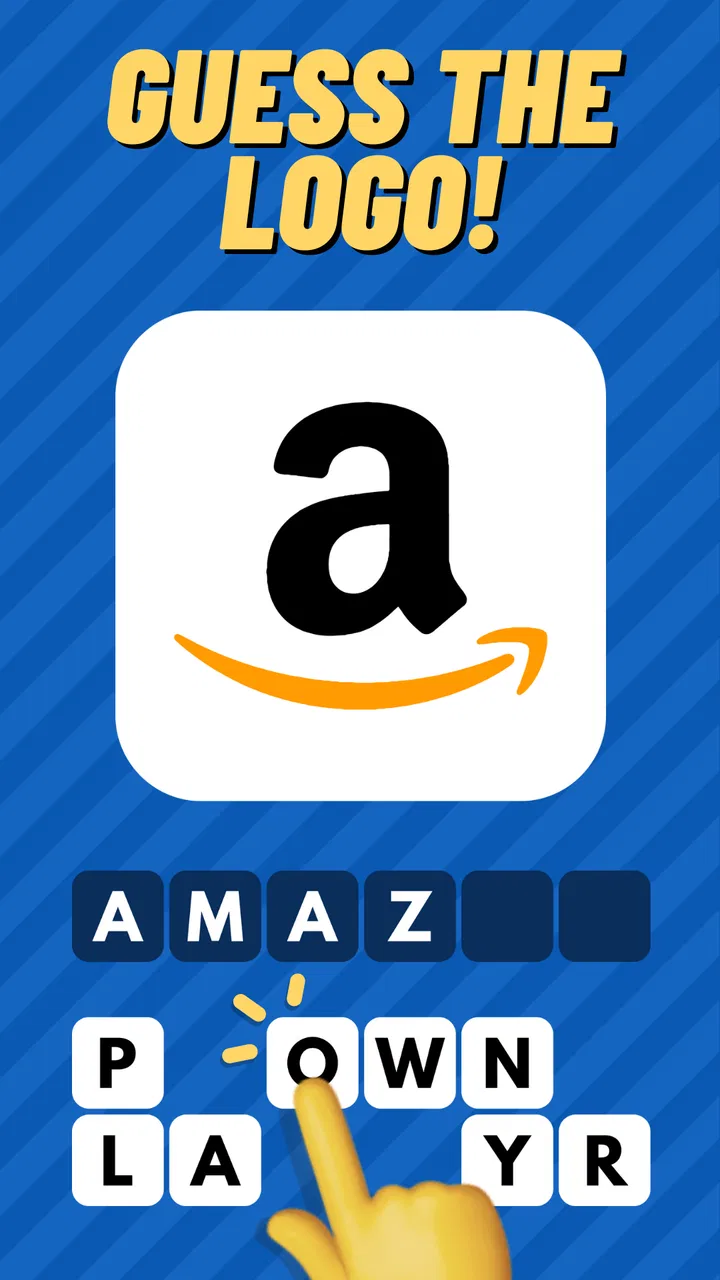
I went into Logo Quiz: Guess the Brand! expecting a quick distraction, and that is exactly where it works best. This is a free trivia game from Kolmo Games built around recognizing familiar brand marks rather than answering broad general-knowledge questions. The idea is immediately understandable: look at a logo, search your memory, and enter the brand name you believe matches it.
That simplicity gives the game a very low barrier to entry. I did not need a tutorial-heavy introduction or a long explanation before starting. It is the kind of title I can open while waiting for an appointment, share with someone sitting beside me, or use for a few relaxed minutes before bed. The important question, though, is whether a logo quiz remains interesting after the first burst of recognition fades. My experience is that it can, but its lasting value depends heavily on how much you enjoy visual memory challenges and whether you are comfortable with repetition.
How the first week feels
The opening appeal comes from the tension between “I know that” and “why can’t I remember the name?” A logo may look obvious at first glance, yet the exact brand can disappear when I have to type it. That small gap between recognition and recall is what makes each round more engaging than simply looking at a list of companies.
You May Also Like

 Blood Strike: 2.5 Anniversary
Blood Strike’s Loadouts Turn Every Drop Into a Tactical Gamble
A close look at Blood Strike’s custom loadouts: how fast access to signature weapons reshapes its battle royale rhythm, rewards preparation, and narrows the gap between fights.

 Pandora - Music & Podcasts
Pandora’s Music Is Easy to Start, but Harder to Recover
Pandora’s strength is its low-effort path from a seed to a station. Its weak spot is how much confidence it asks you to place in connection, setup, and quiet recovery.

 8 Ball Pool
 Is Built on Rivalries, Rematches, and Routine
A close look at the rivalries, rematches, shared routines, and unanswered safety questions that turn a quick pool match into a persistent mobile community.

 Samsung Music
’s Quiet Strength Is Playing What You Already Own
Its reach comes less from spectacle than from dependable access to a personal library. That simplicity is both the app’s strongest retention engine and its ceiling.

 AccuWeather: Weather Radar
AccuWeather Review: A Quick, Clear Forecast for Everyday Decisions
For everyday plans, the best forecast is the one you can understand quickly. AccuWeather makes rain timing, radar, and local conditions easy to act on, with a few trade-offs.

 Hill Climb Racing
Why Hill Climb Racing Still Turns Crashes Into One More Run
A tiny car, a bumpy hill and one more upgrade: Hill Climb Racing keeps resurfacing because its simple chaos makes every near-miss feel personal.
More From Our News Desk



I also like that the concept works for different levels of knowledge. Some images are likely to feel instantly familiar, while others make me think about where I have seen a particular symbol, color combination, or shape. The game therefore sits somewhere between casual entertainment and a memory exercise. It does not demand a long uninterrupted session, which makes it easier to fit into ordinary downtime than a larger trivia game with lengthy rounds.
During the first few sessions, the strongest social use case is playing with another person. Two people often remember different brands, so a logo that stops me can be obvious to a friend, and vice versa. That turns a solitary guessing task into a light conversation starter. It is especially suitable for a family setting because the Everyone content rating makes it broadly approachable, although the actual enjoyment will still depend on how familiar each player is with the brands represented.
The game’s public reception also suggests that the basic loop connects with a substantial audience: it has a 4.7 average from around 5.4 thousand ratings and more than a million installs. I would not treat those figures as proof that it is perfect, but they do match my impression that the premise is easy to understand and satisfying enough to attract repeat play.
One useful habit is to avoid treating every difficult logo as a failure. When I cannot recall an answer, I try to describe the image aloud or break it into visual parts before reaching for help. That changes the experience from random guessing into deliberate recall. It is a small adjustment, but it makes the game more rewarding for anyone who enjoys puzzles rather than simply tapping through familiar answers.
Why the simple format works
Logo quizzes benefit from instant visual feedback. A traditional question can feel abstract, but a logo gives me something concrete to inspect. Even when I do not know the answer, I can form a theory based on the design. That makes each challenge feel active without requiring complicated controls.
The format is also easy to understand for occasional players. I do not have to remember a story, manage a character, or learn a collection of systems before making progress. For a short break, that is a genuine strength. The trade-off is that the game’s simplicity leaves less room for surprise once the central pattern becomes familiar.
Another practical advantage is that the free entry point lets me test whether the subject suits me before spending anything. The game includes in-app purchases ranging from $2.39 to $59.99 per item, so I would approach optional spending carefully. A free download is useful here because my enjoyment depends less on presentation or complexity and more on whether identifying brands remains fun after the novelty of the first sessions.
What keeps it useful from month to month
For long-term use, the key issue is not whether I can play it for an afternoon. It is whether I have a reason to return after I have already seen many recognizable logos. A good recurring trivia game needs either a steady feeling of discovery or enough variation in difficulty to keep memory from becoming automatic.
This title has a natural advantage for casual revisits because logo recognition is not a skill I practice in a fixed, formal way. I may forget an answer between sessions, especially when several brands have similar visual identities. Returning later can therefore recreate some of the original challenge. It is not the same as receiving completely new knowledge, but it can still provide a pleasant memory workout.
I think the best monthly routine is short and irregular rather than intense. Playing every day for a long stretch could make the format feel repetitive, while opening it occasionally preserves the feeling of testing myself. I would use it as a five-minute fallback rather than as my main game. That approach also makes it easier to notice which types of logos cause trouble: text-based marks, abstract symbols, older designs, or brands from areas I rarely encounter.
There is a useful learning angle here. After missing a logo, I can connect the answer to a visual clue instead of memorizing the name in isolation. For example, I might remember the shape, color arrangement, or a distinctive letterform. On a later visit, that association gives me a better chance of recalling the answer. This is more effective than repeatedly typing random guesses, and it gives the game a small but real memory-training quality.
It can also work as a shared challenge over time. If I play with friends or family, we can compare which logos each person recognizes. Someone interested in technology, fashion, food, sports, or travel may have a very different recall profile. That variety helps the game last longer in a group than it might for a single player who quickly becomes familiar with the available material.
Still, I would not confuse replayability with endless freshness. The core activity remains the same, and the app is not the right choice for someone who needs a constantly changing competitive environment, deep progression, or a broad range of trivia subjects. If I want history, science, geography, and current events in one place, a general quiz platform is likely to offer more variety. Logo Quiz is narrower by design, and that focus is both its identity and its main limitation.
Who will get the most from it
I would recommend it most to players who enjoy visual puzzles, brand recognition, and low-pressure sessions. It is a good fit for someone who likes testing memory without committing to a large game. It also suits households where people have different strengths, because the answers can prompt discussion rather than requiring one expert player to dominate.
It is less suitable for players who dislike commercial imagery or who find repeated recognition tasks boring. Someone looking for a story, strategic decisions, or a strong sense of character progression will probably lose interest quickly. The same is true for a trivia fan who wants questions that teach a wide range of facts rather than identify logos.
The age rating of Everyone makes it easy to consider for mixed-age play, but I would still keep expectations realistic for younger players. A child may recognize brands seen frequently at home, while an adult may know logos from workplaces, shopping, travel, or older media. The game can be inclusive, but not every challenge will be equally familiar to every age group.
Maintenance, friction, and the cost of returning
A lightweight game has a maintenance advantage: I can return without rebuilding a complicated routine. There are no elaborate controls for me to relearn, and the central action remains obvious. That makes it dependable as a spare-minute app. The current version is 1.22.7, and it supports devices running Android 7.0 or later, which gives it a practical place on many older Android phones as well as newer ones.
At the same time, the very lack of complexity can become a maintenance burden of another kind. There is not much to manage, but there may also be little to refresh my interest once the guessing loop becomes predictable. I need to supply the variety myself by changing how I play: using it with another person, setting a short session limit, or treating difficult answers as memory prompts rather than obstacles.
I would also pay attention to the purchase path. Because the game is free but offers individual in-app purchases from $2.39 up to $59.99, I would avoid buying anything impulsively during a frustrating puzzle. A stuck answer can make a hint or other assistance feel more valuable than it really is. My practical rule would be to attempt a few thoughtful recalls first, then decide whether spending money genuinely improves the experience for me.
This is one area where the game differs from a completely offline puzzle book or a basic set of printed flashcards. A physical alternative has no purchase prompts and can be used in the same way every time, but it also lacks the convenience of having a ready-made quiz on a phone. A broad trivia app may offer more subjects and stronger long-term variety, while this game offers faster access to one very specific kind of challenge.
The best everyday scenario is simple. I might be on a train with a few minutes before arriving, open the game, solve several logos, and close it without feeling that I abandoned a larger task. In a waiting room, I could hand the phone to a friend and turn the session into a quick contest. At home, it could fill the gap between other activities. Those uses are modest, but they are realistic and explain why a focused game can earn a place on a device even without becoming a primary hobby.
Where fatigue starts to appear
The first source of fatigue is repetition in the action itself. Looking, guessing, checking, and moving on is a clean loop, but it does not offer much mechanical variation. If I play for too long, the pleasure of recognition can flatten into a sequence of similar attempts.
A second issue is uneven personal familiarity. A logo may be obvious to one player and completely opaque to another, not because one person is better at trivia but because their daily experiences are different. That can make progress feel less like measuring knowledge and more like measuring exposure. I appreciate the challenge more when I remember that distinction, but it can still be discouraging when several answers in a row fall outside my experience.
There is also a difference between remembering a brand and knowing its exact written name. A player may identify the company visually but struggle with spelling or wording. That can create friction that feels separate from the actual trivia challenge. I prefer to slow down and think about the formal name before trying repeated variations, because careless guessing can turn a solvable image into an irritating typing exercise.
The commercial subject matter may not appeal to everyone either. Some players enjoy recognizing logos because they are part of everyday visual culture. Others may feel that the game rewards advertising exposure rather than meaningful knowledge. Neither response is wrong, but it is an important personal filter. If brand imagery already feels tiring, a conventional question-and-answer trivia game would be a better long-term choice.
Finally, the game’s narrow focus means that a player can reach a point where the remaining challenge feels familiar even when it is not genuinely new. That is where session discipline matters. I would rather play a few rounds, stop while the recognition remains enjoyable, and return later than force a long session and decide the whole app has become dull.
My long-term verdict
After the novelty fades, Logo Quiz: Guess the Brand! earns lasting space mainly as a compact, occasional memory game. I would not install it expecting a deep trivia system or an endlessly expanding hobby. I would install it because the visual guessing format is immediately accessible, works well in short breaks, and can become surprisingly social when two people bring different brand knowledge to the same screen.
Kolmo Games has a focused idea here, and the focus is both the reason to recommend it and the reason to be selective. The free price makes trying it easy, the Everyone rating broadens its potential audience, and the strong 4.7 average shows that many players respond well to the premise. The game’s real test is personal: do I enjoy recognizing logos enough to revisit the same style of challenge after the first week?
My answer is yes, with limits. I would keep it for travel, waiting periods, and informal play with friends or family. I would use short sessions, treat missed answers as recall practice, and be cautious with in-app purchases rather than paying simply to remove the discomfort of being stuck. Those habits preserve the fun and reduce the two biggest risks: repetition and unnecessary spending.
If you want broad subject coverage, strategic depth, or a strong progression system, choose a different trivia game. If you want a friendly visual test that can be opened instantly and enjoyed without a serious time commitment, this one is worth trying. Its lasting value comes from fitting neatly into real life, not from pretending to be more complex than it is.
For me, that is enough to recommend it as a small, dependable game rather than a permanent centerpiece. It may not occupy every spare moment forever, but with occasional play and realistic expectations, it has a reasonable chance of surviving beyond the first burst of curiosity.
FAQs for Logo Quiz: Guess the Brand!
01What is Logo Quiz: Guess the Brand!?
Logo Quiz: Guess the Brand! is a fun and addictive trivia game where players are challenged to identify logos from various brands. The game tests your brand knowledge across different categories, offering multiple levels of difficulty. It's a perfect way to challenge yourself and improve your brand recognition skills.
02Is Logo Quiz: Guess the Brand! free to play?
Yes, Logo Quiz: Guess the Brand! is free to download and play. However, like many free apps, it does contain in-app purchases. These purchases can enhance your gaming experience by offering hints or removing ads, but they are entirely optional, and you can enjoy the game without spending any money.
03Can I play Logo Quiz: Guess the Brand! offline?
Logo Quiz: Guess the Brand! requires an internet connection for initial download and any subsequent updates. However, once installed and updated, you can play the game offline. This makes it a great option for entertainment on the go, especially in places where connectivity might be limited.
04What are the main features of Logo Quiz: Guess the Brand!?
The game offers a wide range of features, including hundreds of logos to guess, varying levels of difficulty, and a hint system to assist when you're stuck. It also includes a leaderboard for competitive play and regular updates with new logos, ensuring a fresh and engaging experience.
05Is Logo Quiz: Guess the Brand! suitable for all ages?
Logo Quiz: Guess the Brand! is suitable for players of all ages. With its simple interface and educational value, it can be a fun family activity. However, some younger players might need assistance with more challenging logos, making it a great opportunity for collaborative play.
Pros
- Wide variety of logos to challenge users.
- User-friendly interface with smooth navigation.
- Regular updates with new logos.
- Offline play available for convenience.
- Hints and clues to assist in tough levels.
Cons
- Contains ads that may disrupt gameplay.
- Some logos can be too obscure.
- In-app purchases for hints can be pricey.
- Occasional glitches in logo recognition.
- Limited social sharing options.

Logo Quiz: Guess the Brand!
Gallery